
 Too long, I want to choose to read it.
Choosing the right car tires is essential for the overall performance and safety of your vehicle. Selecting tires should be based on your operating conditions, handling preferences, and driving response. Knowing which tire size is appropriate for your vehicle ensures you can make the right choice when buying tires.
Information for choosing the right tires can easily be found in your vehicle owner's manual or on specific placards on your car. If you know the proper size for your vehicle and want to select bridging or specific tire models, check the tire catalog.
Beyond checking tire width and diameter, other crucial factors include the load index and speed rating when selecting appropriate tires, whether for 15-inch, 17-inch, or 18-inch rims.
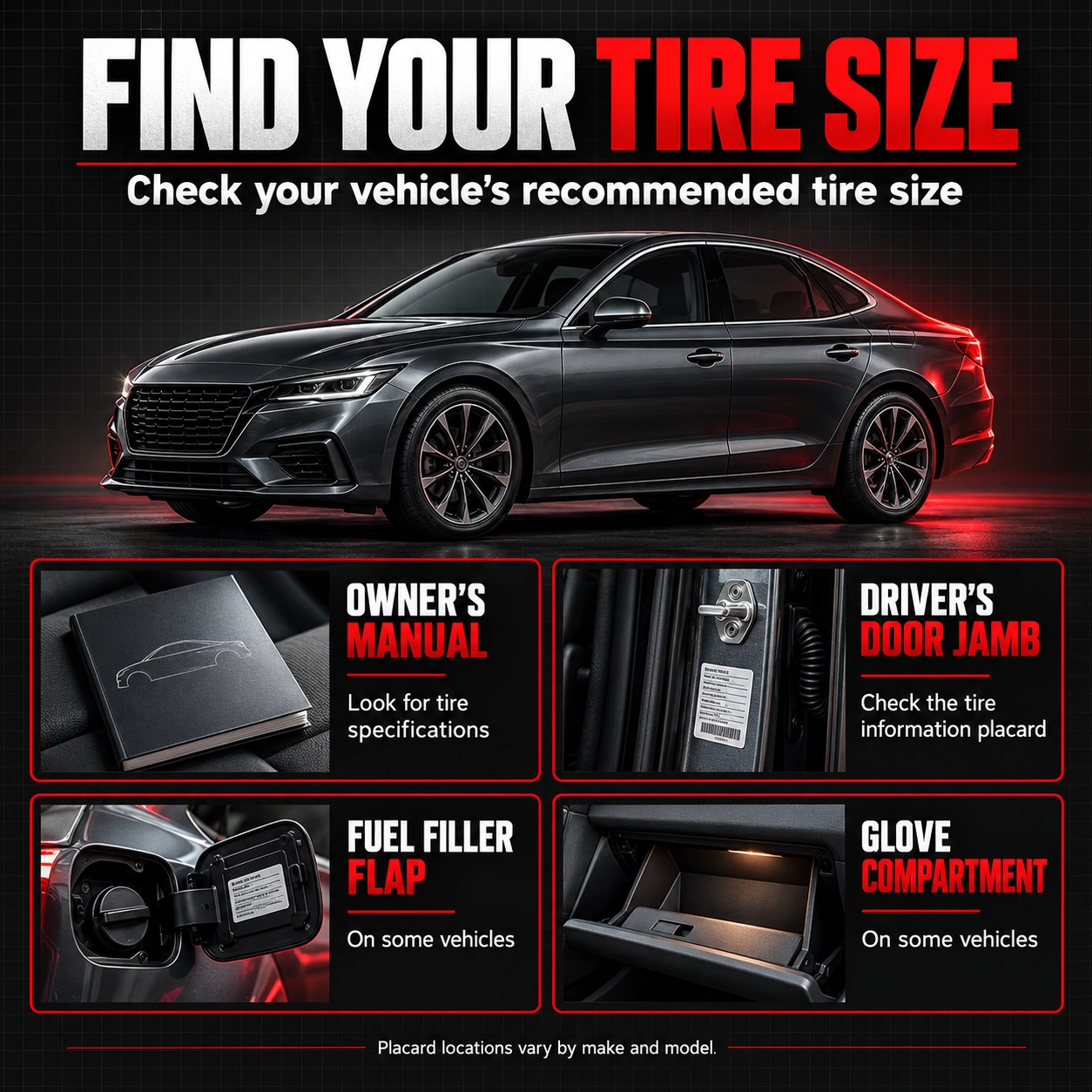
Whatever you drive, finding manufacturer-recommended tire info is easiest in your owner's manual. If you don't have the manual, you can find it in these locations:
Driver's side door jamb
Glove compartment
Fuel filler door
Assuming your current tires are appropriately sized, you can also find tire information directly on the sidewall. Wherever you find it, understanding the letters and numbers code is essential.
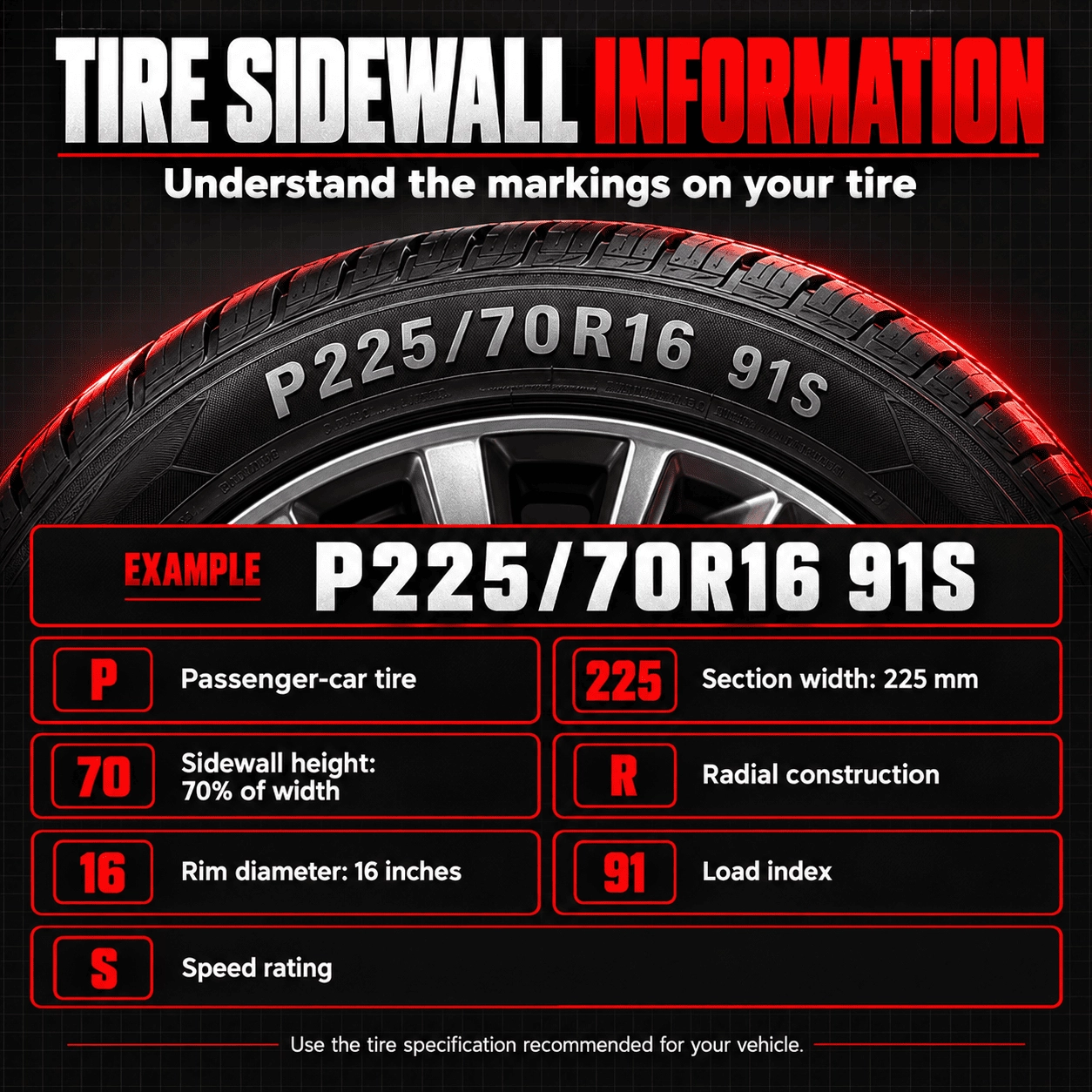
Let's break down what letters and numbers mean when selecting tires, for example: 225/70R16 91S.
For most passenger cars, you will see a "P" followed by numbers, such as P225/70R16 91S. The letter "P" is designated by the Tyre and Rim Association for passenger car tires, indicating design use for passenger cars, small vans, utility vehicles, and pickups. If you see "LT" instead of "P", it designates light truck tires. Additionally, LT-metric designates heavy-duty commercial and trailer tires. Similarly, "T" stands for Temporary (spare tire), and "ST" stands for Special Trailer tires.
The first number on a tire code indicates tire width in millimeters, e.g., P225/70R16 91S means a width of approximately 225 mm from sidewall to sidewall under standard inflation.
The number following the width is the aspect ratio—the ratio of sidewall height to tire width, expressed as a percentage (e.g., a series of 70 means the height is 70% of the width). Lower aspect ratios (like 45 series) typically offer better cornering grip than higher series (like 55 series).
Following the aspect ratio, a letter indicates internal construction:
R – Radial: Cords run at right angles to the circumference.
D – Diagonal or Bias Ply
The number following the construction code specifies the wheel rim diameter in inches that the tire fits (e.g., 16 inches for R16).
The next number represents the load index, showing the maximum weight capacity a tire can support when fully inflated (ranging from index 60 to 179, covering 250 to 7750 kg).
The final letter/number indicates the maximum speed capability tested in standard labs (e.g., "S" stands for up to 180 km/h, "R" for up to 170 km/h). Replacement tires should match or exceed the original speed rating to maintain performance standards.